Nordic collaboration accelerates climate finance for lasting impact
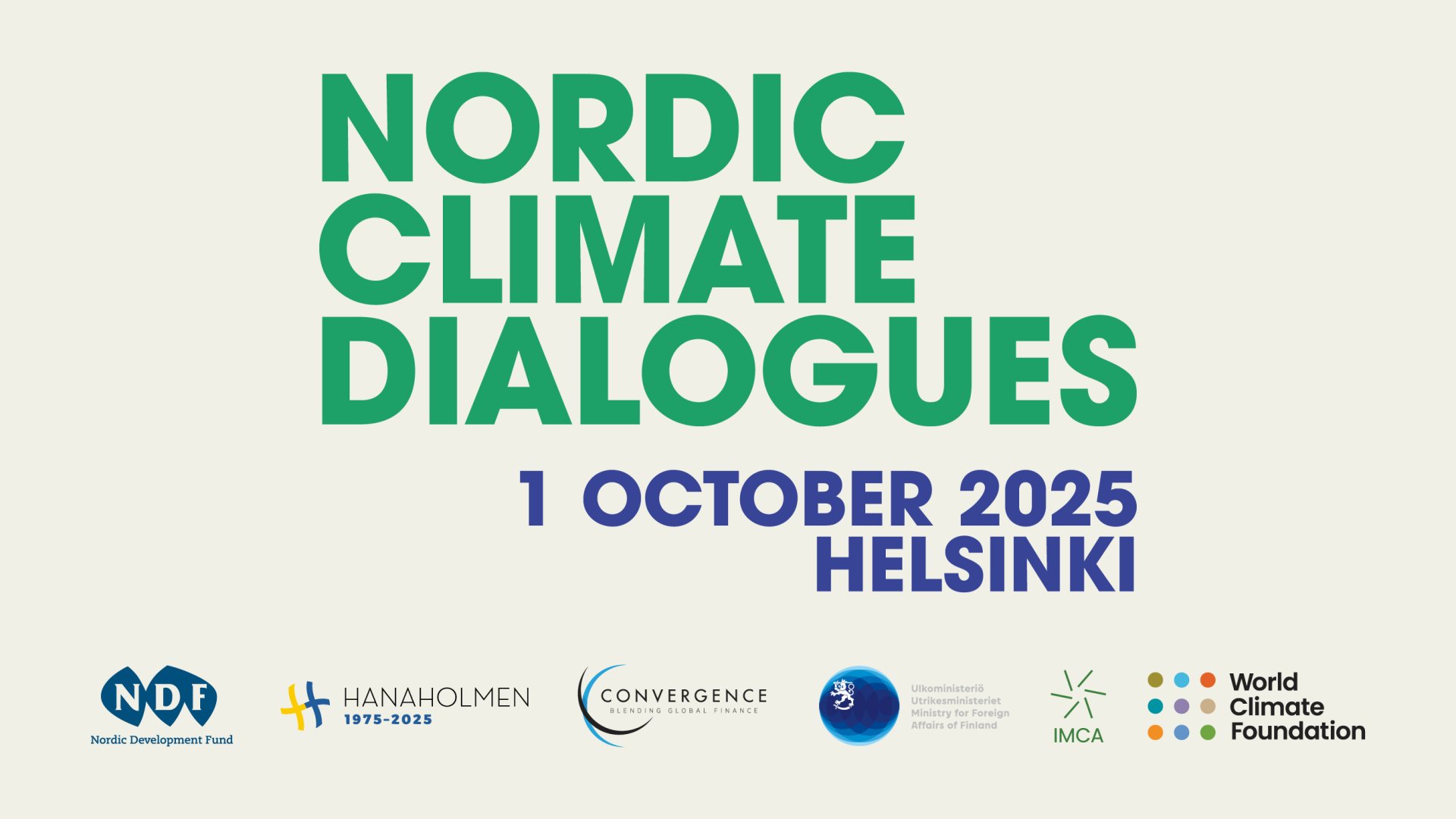
The world needs urgent action to address climate change and advance development finance. Nordic Climate Dialogues on 1 October 2025 aims to improve Nordic collaboration in this endeavour.
Climate change poses challenges for developing countries, where extreme weather events, rising temperatures and shifting rainfall patterns threaten livelihoods, food security and infrastructure. Many of these nations face limited resources to adapt to and mitigate the impacts, making international collaboration and private sector investment increasingly vital to build resilience and foster sustainable growth.
Nordic Climate Dialogues aims to facilitate greater joint collaboration among Nordic stakeholders to accelerate the response to climate change. Decision-makers from the public and private sectors will come together to explore ways to build closer networks and improve outcomes.
“We need to do more, but some governments around the world are cutting their commitments,” says Gunvor Kronman, CEO of Hanaholmen Cultural Centre in Espoo, Finland, where the event will take place. “It is time for us in the Nordic countries to address this challenge and work together.”
The OECD estimates a 9-17% drop in official development assistance in 2025, on top of a 9% drop in 2024. While total climate finance has been increasing at about 26% annually, only a fraction of that spending is happening in the least developed countries. Filling this funding gap at the intersection of development finance and climate change response is now more important than ever.
BRINGING NORDIC COUNTRIES TOGETHER TO MOBILISE MORE CLIMATE FINANCE
A key goal of Nordic Climate Dialogues is to encourage collaboration not just among the Nordic countries, but also among public organisations and private companies from around the world.
“There is a huge financing gap which the public sector cannot fill alone. We need the private sector’s involvement,” explains Robin Ivory, Manager of Market Insights at Convergence. “Blended finance allows organisations with different mandates to participate in the same transaction. Private companies might think some projects are too risky or out of their scope, but by partnering with public or philanthropic capital they can improve diversification and enhance returns.”
Through collaborative action, blended finance initiatives, multilateral engagement and knowledge sharing, the Nordic countries have established a robust model for mobilising private sector finance in support of developing countries. The Nordic countries’ collaborative approach not only amplifies their individual efforts but also sets a benchmark for international cooperation in sustainable climate and development finance.
“Today, Nordic cooperation is deeper than ever,” Gunvor Kronman continues. “I hope many positive developments emerge from Nordic Climate Dialogues. We need to bring hope and positivity to not just us in the Nordic region, but also to the most vulnerable regions around the world.”
Nordic Climate Dialogues 2025 is organised by Nordic Development Fund. Partners include Hanaholmen – the Swedish-Finnish Cultural Centre, the Ministry of Foreign Affairs of Finland, Convergence, Investment Mobilisation Collaboration Alliance (IMCA) and the World Climate Foundation.
The first part of the event can be viewed online, beginning at 10:00 (GMT+3) on 1 October 2025.