NDF's investment in Climate Investor Two strengthens biodiversity in the Galápagos
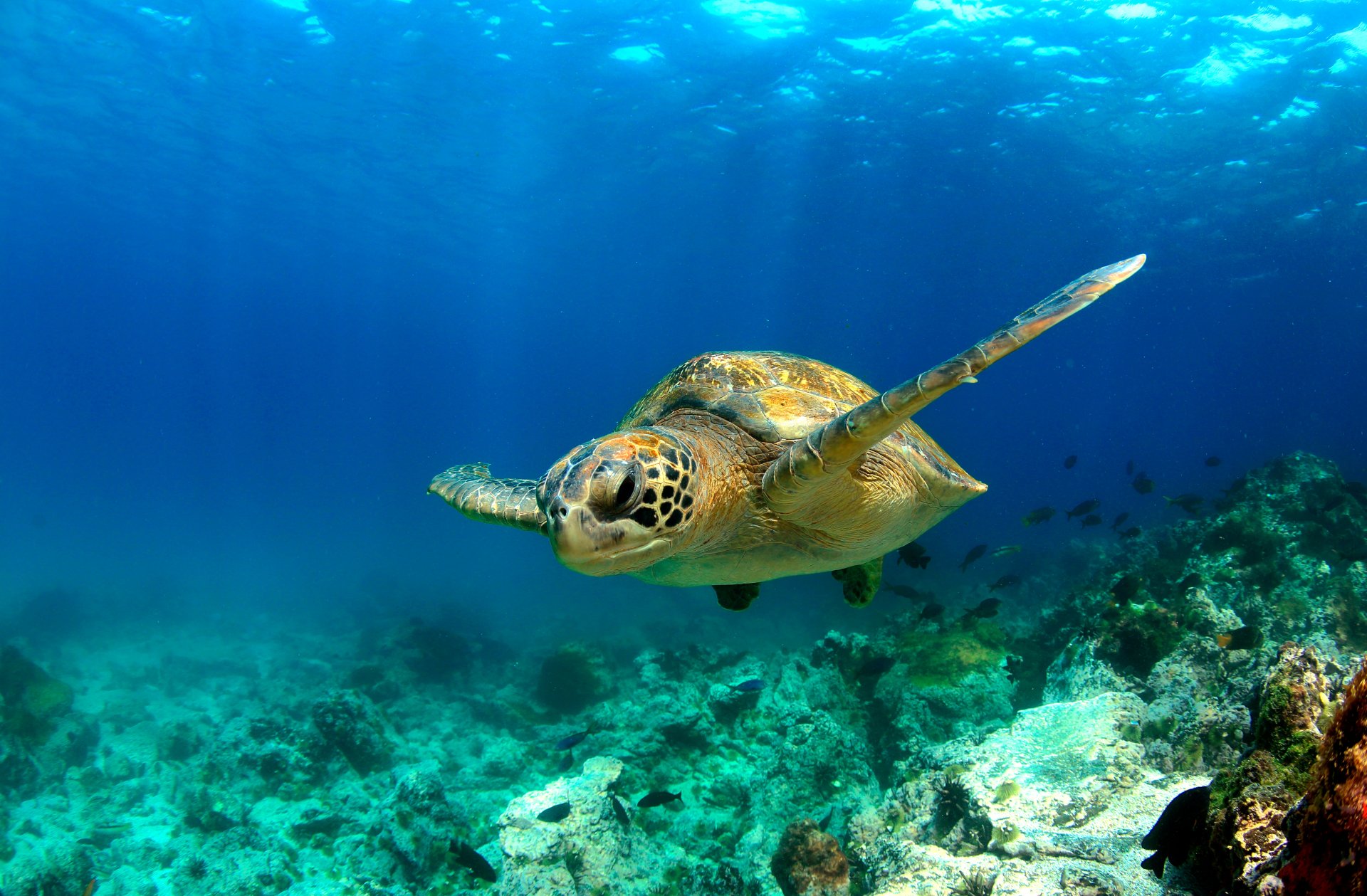 The Galápagos has some of the richest and most unique biodiversity on the planet. Photo: AdobeStock, Longjourneys.
NDF's support improves the environment and biodiversity through its investment in Climate Fund Managers’ Climate Investor Two Fund – an innovative blended finance facility focused on investments in water, sanitation and ocean infrastructure to enable communities to adapt and become resilient to the effects of climate change.
The Galápagos has some of the richest and most unique biodiversity on the planet, including sea lions, seals, cormorants, dolphins, albatrosses, tropical fish, penguins and the famous marine iguanas. Many of these species are found nowhere else on Earth: 30% of the plants, 80% of the land birds and 97% of the reptiles and land mammals are endemic. Experts suspect there are many species as-yet undiscovered by science, but they may become extinct before they can be identified.
Climate change is placing increasing strain on ecosystems worldwide, placing unique and fragile environments like the Galápagos Islands at growing risk. A debt-for-nature swap, implemented by Climate Investor Two (CI2), which enables countries to free up financial resources to protect nature, will help strengthen the protection of this vital marine ecosystem.
Climate Investor Two is a blended finance facility managed by Climate Fund Managers, a leading investment manager focused on emerging markets. It channels investments into climate-resilient infrastructure where it is needed most. Operating across Africa, Asia and Latin America, the fund targets critical sectors such as water, sanitation, waste and oceans, helping communities strengthen their resilience in the face of climate change. It has a goal to accelerate project development and mobilise private capital, as it has done in the largest debt-for-nature conversion in history.
“CI2 has grown into the largest climate adaptation infrastructure fund focused on emerging markets, and NDF is proud to support the fund as an early and catalytic investor,” explains Michelle Voon, Program Manager for NDF. “With NDF’s new Strategy 2030, NDF is also deepening its focus on nature-positive and biodiversity investments, ensuring that our capital delivers co-benefits for nature, reduces vulnerabilities and contributes to both climate and nature goals for sustainable and inclusive development.”
Catalytic finance is key to attract private capital
In 2023, a historic debt conversion by the government of Ecuador —implemented in partnership with Climate Investor Two—increased protection for the Galápagos Islands and their marine environment by enhancing protections and encouraging the sustainable development of the blue economy. NDF, as a joint Nordic financial institution, had a catalytic role to this achievement through its EUR 15 million investment in CI2. In addition to NDF, other Nordic investors in the fund include the Swedish Development Finance Institution, Swedfund, and Norwegian pension fund Kommunal Landspensjonskasse.
The transaction exchanged old, high-interest debt with new, lower-interest debt. Ecuador was able to borrow new debt at a lower rate of interest, thanks in part to the capital provided by CI2, as well as other risk-mitigation features such as insurance. Ecuador repurchased USD 1.599 billion of their existing bonds at a 59% discount, using a USD 656 million loan raised for this purpose.
“We used a blended finance structure,” explains Erik Wandrag, CEO of Oceans Finance Company (OFC), a natural capital investment company that project managed the transaction. “The funding needs for the environment are so great that we absolutely must involve private capital. Concessional capital, such as through development banks or international financial institutions like NDF, can help lower the overall risk and attract private investors.”
Lessons learned can be applied in future transactions
“The U.S. International Development Finance Corporation provided political risk insurance as a form of credit enhancement on the loan. This significantly lowered the interest rate and borrowing costs,” Wandrag continues. “OFC supported the leveraging of a USD 85 million loan guarantee from IDB to meet the cash reserve required to obtain the political risk insurance, a first for a debt conversion.”
Despite growing interest, debt-for-nature swaps remain relatively uncommon, largely due to their structural complexity, high transaction costs, and the need for alignment among multiple stakeholders. Before the Ecuador transaction was finalised, the African Development Bank estimated 145 debt-for-nature swaps worth USD 3.7 billion have been completed around the world since the 1980s. The Ecuador deal was complicated and took three and a half years to complete. Still, this was faster than some debt-to-equity swaps which have taken twice as long.
“Yes, there are a lot of moving parts,” Wandrag says. “We had to be careful and do our due diligence with studies, lawyers and investment bankers. We hope to standardise and replicate these frameworks and structures for the future, as well as develop other innovate financing structures, making such transactions cheaper, faster and easier.”
Savings are used to protect biodiversity
The savings left from the lower interest costs goes into the Galápagos Life Fund (GLF), a non-profit conservation trust fund. About USD 13 million annually is earmarked for marine conservation activities, while about USD 5 million goes into an endowment fund which is expected to grow to USD 240 million by 2041.
The conservation funds helped create and protect the 60,000 km2 Hermandad Marine Reserve (HMR), a key biodiversity hotspot adjacent to the existing protected area. The HMR also provides a critical migratory route for endangered marine species including hammerhead sharks, manta rays, marine turtles and blue whales.
One of the first projects for the Galápagos Life Fund was to make a study of the HMR to judge the biodiversity and health of the ecosystem. Other projects can be related to the management of the HMR, sustainable fisheries, research and environmental education projects. The project is already showing positive benefits to the biodiversity of the Galápagos, while the endowment fund will continue to provide funding long after the debt is repaid.
“A core objective of NDF is to support early-stage and innovative initiatives, such as CI2 and the OFC debt-for-nature transaction, to demonstrate new and effective ways of delivering impact that can be further replicated and scaled to accelerate sustainable development” says Voon.