NDF Board approved EUR 10 million to improve climate resilience and livelihoods in Ethiopia
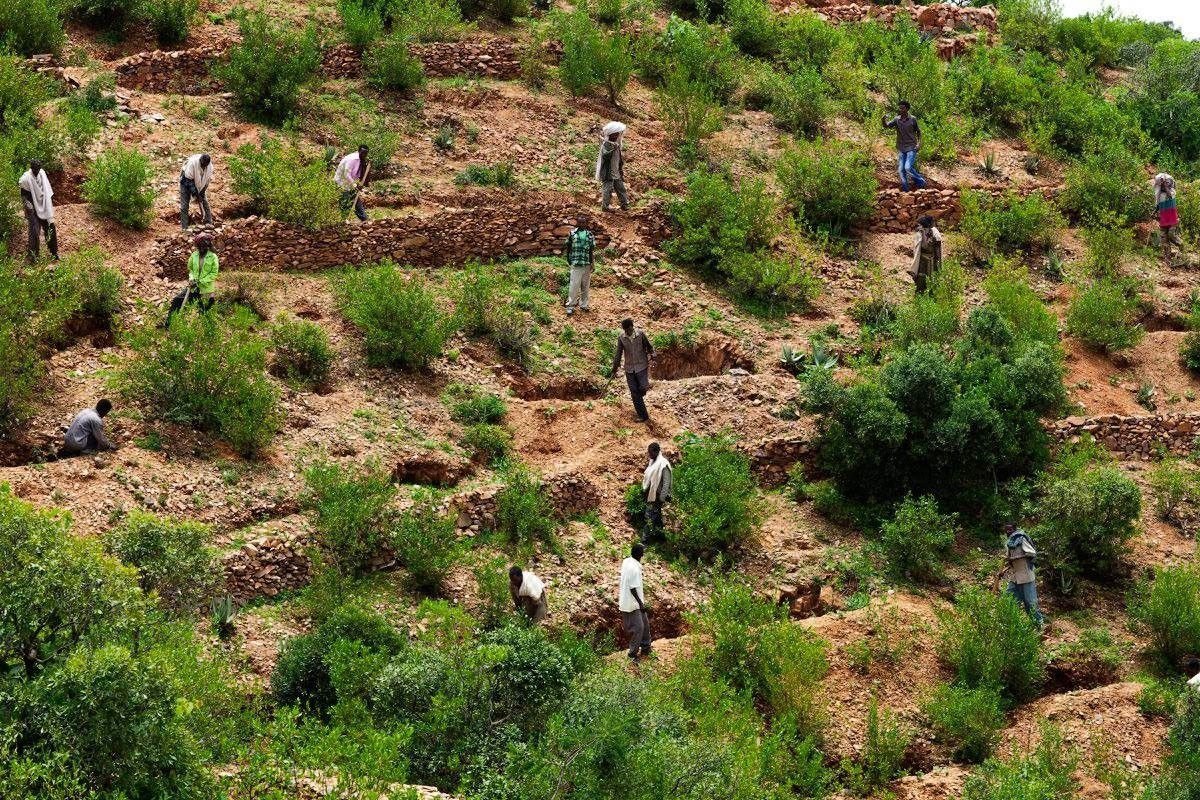 In Ethiopia, majority of the population relies on rainfed agriculture. Photo: Andrea Borgarello/World Bank
In the latest meeting of the Board of Directors, co-financing was approved for the Second Community Action for Landscape Management Program for Results II (CALM II).
Ethiopia is navigating severe macro-economic and social challenges, from rising poverty levels to ongoing internal conflict, while also being on the frontlines of the climate crisis. The country is one of the most climate-sensitive regions in the world and yet over 80% of the population relies on rainfed agriculture for their livelihoods.
Rising temperatures, recurrent droughts and increasing extreme rainfall events threaten the livelihoods and food security – with seven major droughts recorded in the last 30 years, pushing over 40% of the population below the poverty line. The harshest impacts of poverty and climate hazards affect women and girls disproportionately, as they are more vulnerable to economic, social and environmental changes.
NDF’s catalytic role aims to accelerate results
CALM II aims to strengthen primarily climate resilience in highland areas by expanding sustainable land management practices. Building on earlier work in forest protection, climate-smart agriculture and soil and water conservation, the project will help restore degraded forests, strengthen agribusiness value chains and mobilise private-sector engagement through payments for ecosystem services and a carbon credit system.
NDF has committed (subject to conclusion and entry into force of related financial contractual agreements) EUR 10 million to this project, led by the World Bank and the Ethiopian Ministry of Agriculture, and our contribution plays a catalytic role by helping to establish a robust framework for carbon credit trading. When this is set up, revenues from carbon markets will enable continued financing of landscape restoration activities beyond the lifespan of donor funding. A focus on how income from carbon trading will trickle down to communities will support long-term sustainability of the project results and potential growth for the country.
“This project provides NDF an opportunity to work side-by-side with trusted partners and deliver high impact. Our contribution is catalytic: we help co-create solutions with partners, so climate investments translate into tangible and equitable outcomes for communities, while ensuring strong social and environmental safeguards and gender integration,” says Morten Holm van Donk, Program Manager at NDF.