
De-risking investments for people and the planet
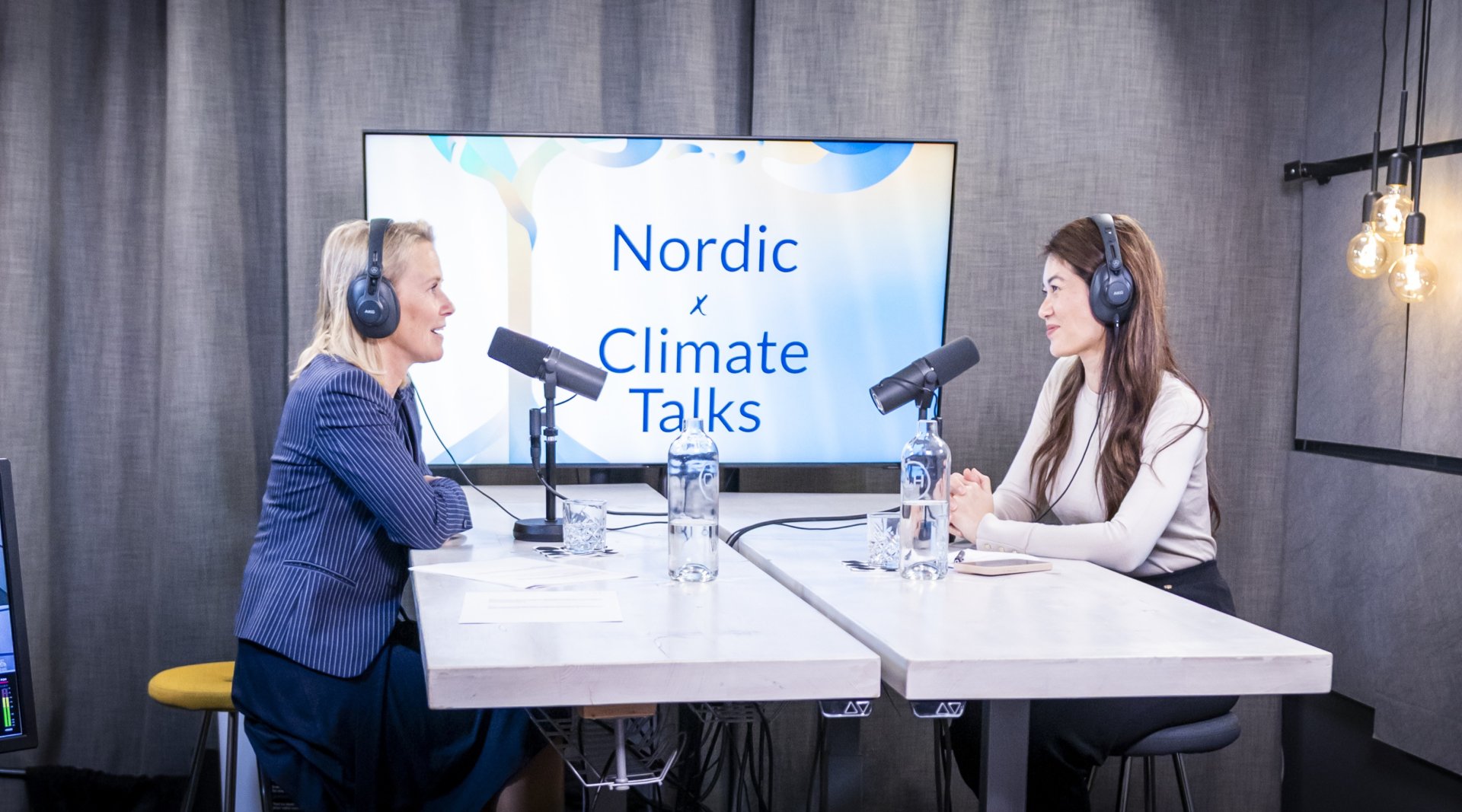 Malena Rosman (left) and Kelly Keodara (right) exchanging about blended finance in the third episode of Nordic x Climate Talks. Photo: PodcaStory
In our third episode of Nordic x Climate Talks podcast, we focus on blended finance and catalysing finance for climate action.
As the world faces an urgent need to mobilise capital for climate action, innovative financial structures are more important than ever. In our latest podcast episode, we explore how blended finance can support catalysing investments to achieve global goals.
Blended finance is a structuring approach that brings together organisations with different goals and resources, enabling them to work together in a shared investment structure. As concessional funding becomes increasingly limited, blended finance is a tool that allows public entities to collaborate with the private sector to achieve development impact without compromising financial returns for investors.
“At NDF, we can use our catalytic funding and take a lot more risks in a blended finance structure together with more commercial actors,” says Malena Rosman, one of our guests for this episode and Director of Portfolio Origination and Management at NDF.
Currently, most blended finance investments are climate-related, but more is needed to continuously work on a more sustainable future.
“In addition to climate, our funding goes mostly to lower-income countries and Sub-Saharan Africa. We can de-risk investments in those areas and contexts, as we really need to provide concessional funding and incentivise private sector players to come in with their financing with lower risks,” she continues.
NDF has good examples of blended finance funds where we have invested in. For example, the Emerging Market Climate Action Fund (EMCAF), the Africa Go Green Fund and the Mirova Gigaton Investment Vehicle, which focus on both climate adaptation and mitigation.
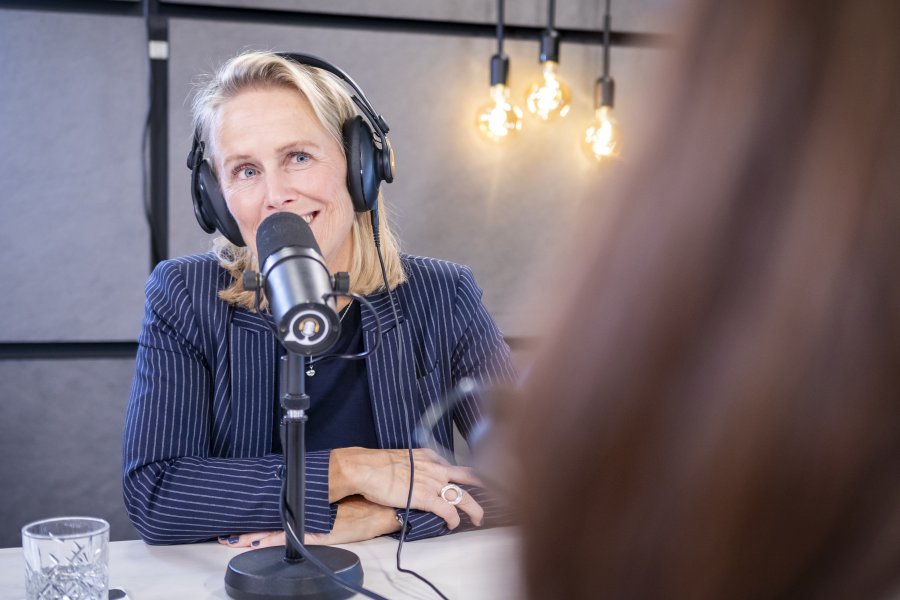
Malena Rosman, Director of Portfolio Origination & Management highlights NDF’s blended finance projects. Photo: PodcaStory
What is the current state of blended finance?
There is a growing urgency of mobilising more climate and development finance. Blended finance is an increasingly recognised tool to catalyse private capital to climate actions, especially in developing countries where perceived political, credit and currency risks often deter investment.
Effective blended finance transactions are designed to achieve development or climate impact in developing countries, which is one of the core goals of blended finance. Another key objective is to attract and mobilise private investments in countries where investors perceive as high-risk.
“We have had a huge amount of trial and experimentation over the last decade in blended finance. There are at least 1500 blended finance transactions in Convergence’s historical database for around USD 250 billion mobilised. However, only 2% of the SDG investment needs are being mobilised through blended finance,” says Chris Clubb, Managing Director of Convergence, our second guest starring our podcast.
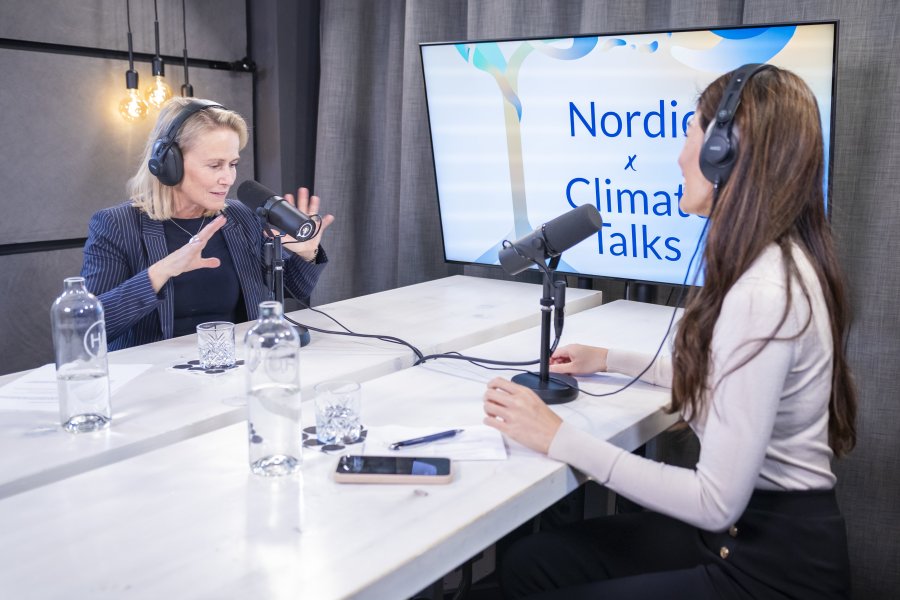
Malena Rosman, Director of Portfolio Origination and Management at NDF, and Nordic x Climate Talks’ host, Kelly Keodara, discuss how we can mobilise more climate finance. Photo: PodcaStory
Nordic collaboration for climate action
Nordic countries have long been trailblazers for climate action and leading the way towards a greener, livable future. To name one of many examples, the Investment Mobilisation Collaboration Alliance (IMCA) led by the Danish Ministry of Foreign Affairs is highlighted in the discussion. Now, IMCA has all five Nordic countries on board, including NDF, and is collaborating to mobilise more climate financing to achieve a much higher level of impact in this area on a global scale.
“I would also like to applaud colleagues at NDF. When we look at what has NDF done in the last six years in blended finance, they have supported some of the most key blended finance transactions, like EMCAF and Climate Investor Two, which both have delivered large amounts of institutional investors into emerging markets,” says Clubb.
In the discussion, Malena Rosman continues by sharing what is important to NDF beyond simply mobilising more financing, but mobilising quality financing: “It is important not only to mobilise capital and take more risks, but also pushing Nordic priorities, such as gender equality and deepening the environmental and social standards.”
As Nordic countries continue championing climate action in financing and in raising awareness on values, initiatives like the ‘Nordic Climate Dialogues’ aim to inspire to bring like-minded climate actors together in Helsinki on 1 October together with partners, including Convergence.
“The event is very much about bringing different partners together and continuing to inspire each other to create mind shifts and finding collaboration opportunities in different spaces. Nordic countries can continue to show leadership, as climate has always been high on the agenda for us. Now more than ever, we hope to strengthen Nordic and global collaboration in this space, through the Nordic Climate Dialogues,” emphasises Malena.