Advancing gender equality along the coastlines of West Africa
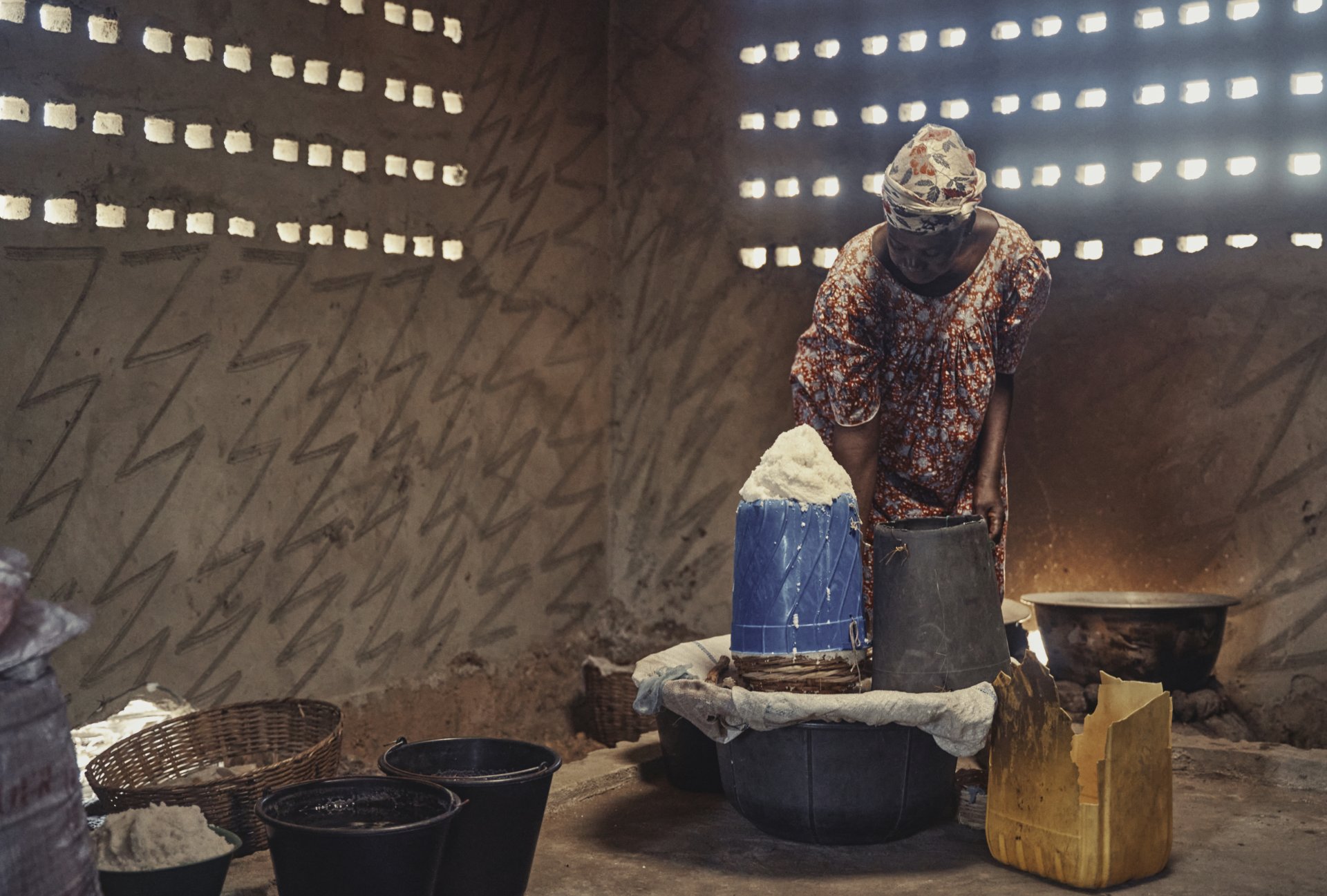 Philomène Dégboe, a salt producer from Benin, is using more time than before in salt production due to coastal erosion. Photo: Shawn N. Hounkpatin
Through dedicated gender responsive approaches, NDF contributes to advancing equality, accountability and inclusion, shaping more resilient coastal communities.
For this year’s International Women’s Day, we mark the critical role of women in shaping climate solutions in the global response to climate change. Women and girls are disproportionately affected by climate change, especially in lower-income countries, where climate hazards are already taking place – deepening already existing inequalities.
Inclusive climate action through gender-responsive financing
At NDF, we prioritise gender equality in the projects we finance and through co-creation and co-designing projects with partners. All the projects we co-finance must be gender-responsive, meaning that the needs, priorities, power structures, status and relationships between genders are considered and addressed.
NDF takes a results-driven approach to gender equality, embedding it across the entire portfolio. A gender responsive approach is integrated from the very start, informing how we set targets and how we monitor progress and evaluate outcomes.
Strengthening gender responsive approaches in projects
Gender equality is not only a policy, it is a requirement for climate resilience, economic prosperity, and long-term development. One example, where NDF’s commitment in advancing gender equality is reflected, is in our support to the West Africa Coastal Areas (WACA) programme.
Together with our partners, we are strengthening gender responsive approaches, improving results management, and supporting local capacity—ensuring that climate solutions benefit those most at risk.
“By working together with NDF on the results indicators, we have further strengthened WACA’s impact management. It is now more focused on measuring gender-responsive approaches and inclusion. By capturing gender data in the programme activities, important lessons can be drawn to feed back into programming, ensuring that those most vulnerable are not left behind,” says Manon Pascale Cassara, Environmental Specialist, the World Bank.
Climate change threatens women’s economic activities
Across the coastlines of West Africa, rising sea levels, coastal erosion and global warming pose increasing threats to homes, livelihoods and ecosystems of coastal communities. These are impacts that often fall on women, whose economic activities are deeply tied to natural resources.
In the Avloh-village in Benin, where the WACA programme is implemented, women have long been at the heart of the salt-production process, gathering sand from the coast to extract salt – a skill passed from one generation of women to the next. Climate pressures have disrupted even this daily activity.
“Before, we didn’t have to go far to extract sand for salt – it was only a 5-minute walk. Now, the arrival of floods in these areas makes it difficult to extract sand. Now, we have to go to Hajibaji, and the only way to get there is by boat, and it takes all day,” says Kakpo Dope, Village Chief of Avloh.
What has been a short walk, has become a full-day activity, limiting productivity, increasing risks and reducing the income women can earn from salt production. This is where WACA’s support becomes important. Through its focus on community-based climate solutions and promotion of gender equality, the programme aims to protect the coastline and restore livelihoods.
“Today, we see that things change. Without this type of work, over time, the river and the ocean will mix, leaving us to face yet another problem linked to rising waters,” says Philomène Dégboé, salt producer from Avloh.
Video: Kerawa Studio