
Towards plastic pollution-free and healthy oceans in Asia and the Pacific
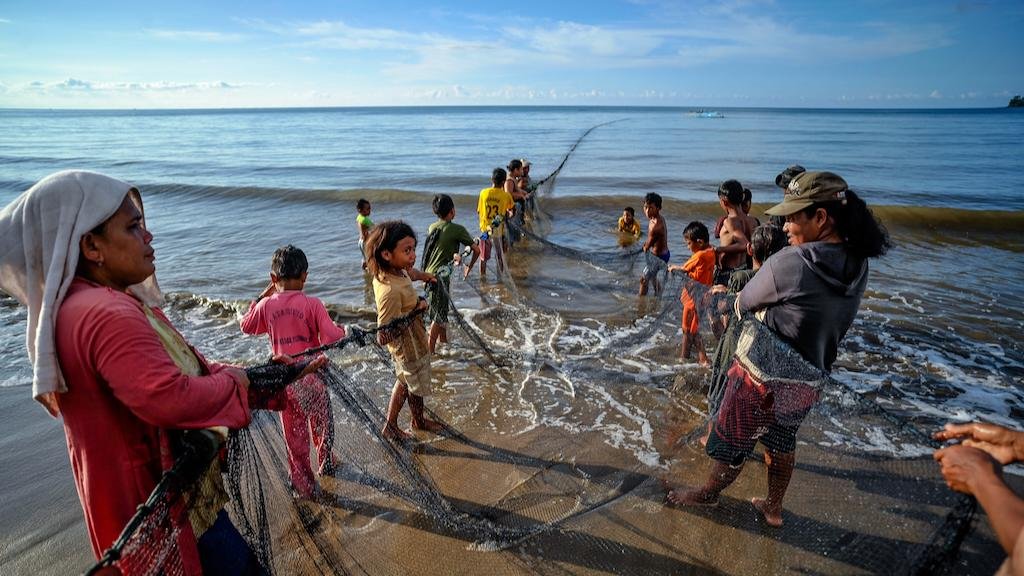 Asia is the world’s top generator of plastic waste, 63% of which is mismanaged. The Philippines alone is estimated to be the single largest source of ocean plastic emissions, followed closely by Indonesia. Photo: ADB
With a contribution of EUR 8.5 million, NDF is proud to support the Ocean Resilience and Coastal Adaptation Trust Fund (ORCA) — driving transformative investments to protect coastal communities from climate change across the Asia-Pacific region.
Oceans cover more than 70% of the Earth’s surface and are essential to life as we know it. They regulate the climate, absorb carbon dioxide, and provide food and livelihoods for over 3 billion people globally. In Southeast Asia, oceans are not only a source of sustenance and income but also a cultural and ecological cornerstone.
Yet, the current ocean health situation is dire with climate change causing warming water temperatures and marine pollution especially plastic pollution, both threatening the flora and fauna, and overfishing and unsustainable tourism depleting it further. The state of the ocean in Southeast Asia and Southern Africa is generally considered worse than in many other regions, according to the Ocean Health Index.
“Asia is the world’s largest generator of plastic waste, with 63% of its plastic waste mismanaged. The Philippines and Indonesia are among the top contributors to marine pollution globally, that have decided to address the situation,” says Siv Ahlberg, Program Manager at the Nordic Development Fund (NDF).
More financing is needed to support the blue economy
But this is not only a unique issue for Asia and the Pacific region. Global plastic waste is a growing environmental crisis with alarming statistics. Since 2000, production has doubled, reaching 460 million tonnes annually, with only a small fraction being recycled. Additionally, one to two million tons leak into the ocean every year, according to Our World in Data.
In return, it affects wildlife and ecosystems: Plastic waste mismanagement creates GHG emissions when the waste is exposed to solar radiation in air and water, destroys marine habitats, damages tourism and fisheries industries, and harms human health through microplastics. The expected tripling of global plastic use by 2060 presents a major hurdle in tackling plastic pollution.
“Therefore, mobilising private capital is critical. With NDF’s projects and initiatives, we support the sustainable blue economy through specific projects and programs in lower-income countries in the Global South,” says Satu Santala, NDF Managing Director.
To date, NDF has committed EUR 63.5 million to projects focusing on oceans and the sustainable blue economy. Most of these contributions are in the form of grants to Africa, Asia, and Latin America. Additionally, we have committed EUR 5.66 million to the sustainable blue economy through the Energy and Environment Partnership Trust Fund, EEP Africa since 2018.
Climate change and plastic pollution are deeply interconnected
One of our projects, Ocean Resilience and Coastal Adaptation (ORCA)Trust Fund, established in 2023, is a multi-donor Trust Fund, co-financed in partnership with the Asian Development Bank (ADB).
As two of the largest contributors to marine plastic pollution globally, Indonesia and the Philippines have launched ambitious national plans to address the issue of plastic pollution in oceans. Indonesia aims to reduce marine plastic debris by 70% by 2025, while the Philippines is working toward “zero waste to Philippine waters” by 2040.
These national efforts align closely with ORCA’s goals and are supported through policy reform, technical assistance, and regional collaboration. With a contribution of EUR 8.5 million to the ORCA TF, NDF aims to drive transformative investments to protect coastal communities from climate change in this region, by enhancing ocean health and resilience, a stronger blue economy, and improve coastal adaptation.
“Climate change and plastic pollution are deeply interconnected and pose severe global threats. By backing projects through ORCA, we can effectively combat climate change, enhance climate and disaster resilience, and promote environmental sustainability,” Siv Ahlberg emphasises.
Other co-financing partners are the United Kingdom (EUR 3.5 million) and Global Environment Facility (EUR 7.7 million). The total amount will be EUR 19 million for the period of 2023-2030 and is expected to grow over time as more donors join the multi-donor Trust Fund.
Our waters matter to all of us
The health of our oceans is not just an environmental issue—it is a development imperative.
Through ORCA and other blue economy projects, we strive to help low-income countries in the Global South to take bold steps toward a cleaner, more resilient, and inclusive blue economy.
“We must act fast. The ocean’s health is declining, and with it, the wellbeing of millions who depend on it. ORCA is one of our commitments to reversing that trend,” Ahlberg highlights.